
Electoral Area ‘G’ Development Permit Area Enforcement
Overview
This project has concluded, as the Bylaw Amendments were adopted by the Regional District of Central Kootenay (RDCK) Board of Directors on October 22, 2026.
What are we doing?
The Regional District of Central Kootenay (RDCK) reviewed how it enforces existing Development Permit Area (DPA) requirements for environmentally sensitive riparian areas.
When the Electoral Area ‘G’ Official Community Plan (OCP) was last updated in 2018, a “Watercourse Development Permit Area” (Watercourse DPA) was introduced to protect riparian areas. Unfortunately, since that time unauthorized development has happened, causing damage to these areas.
To better respond to unauthorized development in Watercourse DPAs, the RDCK strengthened its enforcement options in these areas through these bylaw amendments. This project focused on shifting how unauthorized development in Watercourse DPAs is enforced so it is similar to zoning or building regulations. The goal was to create a more practical disincentive to unauthorized development in areas that are environmentally significant.
Why is it important?
In recent years there has been an increase in unauthorized development in Watercourse DPAs, causing environmental damage. When this happens, there are two different options the RDCK has:
- Ask for voluntary compliance.
This option is usually resource intensive, requiring significant staff time to achieve. The effectiveness of this approach depends on property owners’ willingness to fix the environmental damage they cause.
- Take them to Court.
This option can be used where voluntary compliance fails. It is also resource intensive, requiring significant staff involvement as well as legal costs.
The typical timeline to address unauthorized development in Watercourse DPAs and fix damaged sites ranges from two to five years while fully restoring the environmental damage will take decades.
Environmental damage is fixed slowly under the current framework. Additionally, the cost associated with addressing unauthorized development in Watercourse DPAs is heavily subsidized by the taxpayer. Shifting to an enforcement framework that is similar to how zoning and building requirements are enforced is expected to shift a large portion of that cost from the taxpayer to the person responsible for the unauthorized development and environmental damage in the first place.
Why care about riparian areas?
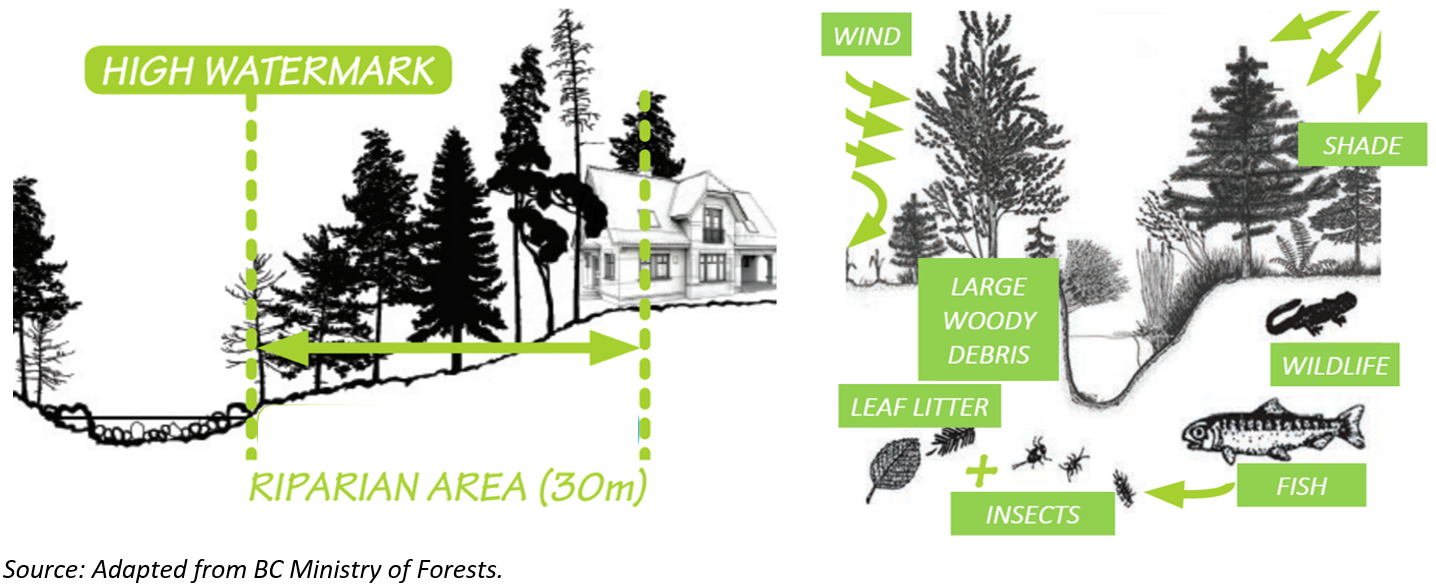
Riparian areas border watercourses, such as lakes, rivers, creeks, streams, ravines and wetlands. They are the transition zones between water and upland areas. They provide the plants and wildlife habitat needed for the health of our aquatic environments. Riparian areas provide the following benefits:
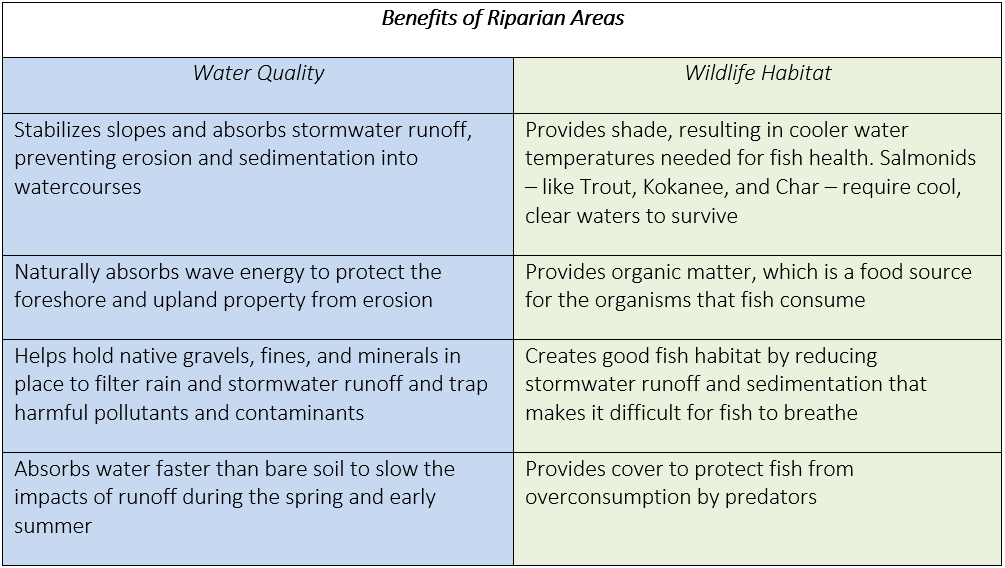
Loss of riparian areas can lead to water quality and wildlife habitat issues in an area. Because of this, it is crucial to ensure that development in or near riparian areas is carried out in a way that is environmentally responsible.
Frequently Asked Questions
What is a “Development Permit Area” (DPA)?
Development Permit Areas (DPAs) are designated areas where a planning permit is required before construction or land alteration/disturbance can occur.
DPAs are designated for areas that require special treatment or consideration when they are developed. DPAs contain specific development guidelines to ensure that new development in that area is consistent with the objectives and policies of the Official Community Plan (OCP).
DPAs can be created to support the OCP objectives of protecting the natural environment, including sensitive ecosystems and biodiversity, and protecting developments from hazardous conditions in the environment (such as flooding, erosion, land slip, rock falls, and fire hazards). Development Permit Areas can also support other OCP objectives for industrial, commercial, and multi-family residential development.
If a property is in a DPA, a Development Permit is required prior to a building permit being issued or development (including site preparation) taking place, and all work must be completed in accordance with the conditions of the Development Permit (unless otherwise exempt).
What is a “Watercourse” DPA?
A Watercourse DPA is an area where development activity must follow certain guidelines to ensure it minimizes negative impacts to the riparian area. A Development Permit is required in these areas prior to preparing a site for development and developing it.
The Watercourse DPA ensures that we understand environmentally sensitive areas and mitigate any potential negative impacts before development activity takes place. Ideally, riparian areas would be avoided altogether in development. However, this would be challenging to do because of how land near watercourses has been developed in the past.
The Development Permit process balances the needs of individuals with the needs of the environment in recognition of this challenge. It encourages property owners to retain native riparian vegetation, avoid environmentally sensitive areas, limit the amount of disturbance to riparian areas, restore damaged aquatic habitats where possible, and choose the most appropriate areas for constructing new buildings.
Are the bylaw amendments introducing anything new?
The bylaw amendments result in the RDCK having increased enforcement options, such as the ability to issue “bylaw offence notices” (tickets) for unauthorized work within a designated Watercourse DPA. Additional clarity was added to the OCP’s policies to ensure consistency with the remainder of the OCP and additional content was added to the Watercourse DPA to be more transparent about the already existing expectations for developing in these areas.
Are Watercourse DPAs currently enforced?
Yes. When the RDCK learns about a Watercourse DPA contravention staff work with the property owner(s) to bring the property into compliance with DPA requirements. Property owners who are unresponsive can be subject to legal action.
The current framework relies on voluntary compliance or court-ordered compliance with the Watercourse DPA requirements. There is currently no middle ground. Having an option to issue tickets would provide that middle ground, enabling more practical enforcement that can resolve issues in a more timely manner.
This project has concluded, as the Bylaw Amendments were adopted by the Regional District of Central Kootenay (RDCK) Board of Directors on October 22, 2026.
What are we doing?
The Regional District of Central Kootenay (RDCK) reviewed how it enforces existing Development Permit Area (DPA) requirements for environmentally sensitive riparian areas.
When the Electoral Area ‘G’ Official Community Plan (OCP) was last updated in 2018, a “Watercourse Development Permit Area” (Watercourse DPA) was introduced to protect riparian areas. Unfortunately, since that time unauthorized development has happened, causing damage to these areas.
To better respond to unauthorized development in Watercourse DPAs, the RDCK strengthened its enforcement options in these areas through these bylaw amendments. This project focused on shifting how unauthorized development in Watercourse DPAs is enforced so it is similar to zoning or building regulations. The goal was to create a more practical disincentive to unauthorized development in areas that are environmentally significant.
Why is it important?
In recent years there has been an increase in unauthorized development in Watercourse DPAs, causing environmental damage. When this happens, there are two different options the RDCK has:
- Ask for voluntary compliance.
This option is usually resource intensive, requiring significant staff time to achieve. The effectiveness of this approach depends on property owners’ willingness to fix the environmental damage they cause.
- Take them to Court.
This option can be used where voluntary compliance fails. It is also resource intensive, requiring significant staff involvement as well as legal costs.
The typical timeline to address unauthorized development in Watercourse DPAs and fix damaged sites ranges from two to five years while fully restoring the environmental damage will take decades.
Environmental damage is fixed slowly under the current framework. Additionally, the cost associated with addressing unauthorized development in Watercourse DPAs is heavily subsidized by the taxpayer. Shifting to an enforcement framework that is similar to how zoning and building requirements are enforced is expected to shift a large portion of that cost from the taxpayer to the person responsible for the unauthorized development and environmental damage in the first place.
Why care about riparian areas?
Riparian areas border watercourses, such as lakes, rivers, creeks, streams, ravines and wetlands. They are the transition zones between water and upland areas. They provide the plants and wildlife habitat needed for the health of our aquatic environments. Riparian areas provide the following benefits:
Loss of riparian areas can lead to water quality and wildlife habitat issues in an area. Because of this, it is crucial to ensure that development in or near riparian areas is carried out in a way that is environmentally responsible.
Frequently Asked Questions
What is a “Development Permit Area” (DPA)?
Development Permit Areas (DPAs) are designated areas where a planning permit is required before construction or land alteration/disturbance can occur.
DPAs are designated for areas that require special treatment or consideration when they are developed. DPAs contain specific development guidelines to ensure that new development in that area is consistent with the objectives and policies of the Official Community Plan (OCP).
DPAs can be created to support the OCP objectives of protecting the natural environment, including sensitive ecosystems and biodiversity, and protecting developments from hazardous conditions in the environment (such as flooding, erosion, land slip, rock falls, and fire hazards). Development Permit Areas can also support other OCP objectives for industrial, commercial, and multi-family residential development.
If a property is in a DPA, a Development Permit is required prior to a building permit being issued or development (including site preparation) taking place, and all work must be completed in accordance with the conditions of the Development Permit (unless otherwise exempt).
What is a “Watercourse” DPA?
A Watercourse DPA is an area where development activity must follow certain guidelines to ensure it minimizes negative impacts to the riparian area. A Development Permit is required in these areas prior to preparing a site for development and developing it.
The Watercourse DPA ensures that we understand environmentally sensitive areas and mitigate any potential negative impacts before development activity takes place. Ideally, riparian areas would be avoided altogether in development. However, this would be challenging to do because of how land near watercourses has been developed in the past.
The Development Permit process balances the needs of individuals with the needs of the environment in recognition of this challenge. It encourages property owners to retain native riparian vegetation, avoid environmentally sensitive areas, limit the amount of disturbance to riparian areas, restore damaged aquatic habitats where possible, and choose the most appropriate areas for constructing new buildings.
Are the bylaw amendments introducing anything new?
The bylaw amendments result in the RDCK having increased enforcement options, such as the ability to issue “bylaw offence notices” (tickets) for unauthorized work within a designated Watercourse DPA. Additional clarity was added to the OCP’s policies to ensure consistency with the remainder of the OCP and additional content was added to the Watercourse DPA to be more transparent about the already existing expectations for developing in these areas.
Are Watercourse DPAs currently enforced?
Yes. When the RDCK learns about a Watercourse DPA contravention staff work with the property owner(s) to bring the property into compliance with DPA requirements. Property owners who are unresponsive can be subject to legal action.
The current framework relies on voluntary compliance or court-ordered compliance with the Watercourse DPA requirements. There is currently no middle ground. Having an option to issue tickets would provide that middle ground, enabling more practical enforcement that can resolve issues in a more timely manner.
Questions
Ask a Question
You must be logged in to ask a question.
Ask a Question
You must be logged in to ask a question.
Who's listening
Contact Options
Key Dates
A public hearing was held on October 1, 2026 at 6:00PM to discuss the proposed land use bylaw amendments and gather resident feedback.