Subdivision Bylaw Update
Overview
What are we doing?
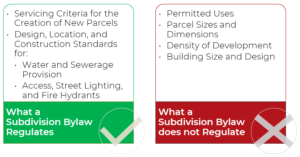
The Regional District of Central Kootenay (RDCK) is in the process of reviewing and updating its Subdivision Bylaw, which is a bylaw that sets out the minimum standards for servicing newly created lots. These standards include provisions for water, sewerage disposal, access, and parkland dedication among others.
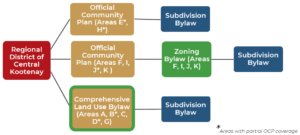
The Subdivision Bylaw supports the implementation of Official Community Plan (OCP) goals and objectives as well as zoning standards in parts of the RDCK where zoning exists.
Why are we doing this review?
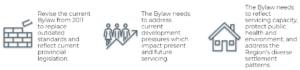
The current Bylaw was adopted in 2011. Since then, provincial legislation, engineering standards, and community needs in the RDCK have evolved. This review will inform the creation of a new Subdivision Bylaw that is:
- Clear and understandable
- Consistent with current legislation
- Aligned with engineering best practices
The new Subdivision Bylaw will consider the diverse settlement patterns and varying servicing needs across the RDCK’s eleven Electoral Areas. Additionally, it will aim to make the RDCK’s servicing requirements for subdivisions easier to understand while ensuring the long-term sustainability of newly created lots.
Key areas of focus
The review is centered around evaluating whether current standards are practical and sustainable for the long term:
Water supply
Reviewing the current standards for “Proof of water”, including:
- Connection to a public or private community system
- Groundwater (drilled wells)
- Licensed surface water sources (lakes, rivers, creeks, etc.)
Sewerage systems
Ensuring long-term environmental health by reviewing requirements for:
- Connection to a community wastewater system
- On-site sewerage disposal (septic) systems
Property access
Reviewing standards for how properties are accessed, including things like panhandle driveways and water access-only lots.
Bylaw administration and process
Making standards current, clear, and reflective of current legislation and best practice.
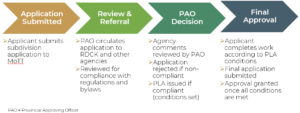
While the RDCK sets its own minimum standards for subdivisions, the actual approval of subdivisions in the RDCK’s rural areas is the responsibility of the Provincial Approving Officer at the Ministry of Transportation and Transit.
How do I stay informed?
Visit this page regularly for updates, and feel free to contact us directly with any questions or feedback. Also take a look at the ‘Documents‘ tab above for additional information.
For more information related to the subdivision process, who is involved, application requirements and fees and things to consider before making an application, refer to the RDCK’s Subdivision Application Information Package as well as the Ministry of Transportation and Transit’s Website.
Frequently Asked Questions
What is a "subdivision bylaw"?
A Subdivision Bylaw sets out the standards and servicing requirements that must be met when land is subdivided. It ensures that new lots are properly serviced, accessible and safe.
The RDCK’s Subdivision Bylaw applies to all electoral areas and regulates the following aspects of subdivision: access, parkland dedication and works and services (i.e. water and sewerage requirements).
How does subdivision work?
Before a parcel of land within the Regional District can be subdivided, a subdivision application must be submitted to and approved by the Ministry of Transportation and Transit (MoTT). As part of this process, MoTT sends the application to the RDCK for review to ensure it is consistent with the RDCK’s land use and subdivision bylaws. The MoTT Approving Officer may refuse a subdivision application that does not comply with the RDCK’s bylaws.
Why update the bylaw?
The primary goal of this project is to create a new bylaw that reflects the needs of the RDCK as they relate to subdivision. It is anticipated that the new bylaw will replace the existing one.
This update aims to:
- Enhance clarity in the subdivision process and make it easier for staff and applicants to understand requirements
- Ensure that subdivision regulations align with current provincial legislation, best practices and community needs
- Set clear, practical standards that reflect the region’s diverse rural and settlement areas
- Ensure that subdivision decisions match servicing capacity and protect public health and the environment
Who is involved in the bylaw review process?
As part of the bylaw update process, the RDCK is seeking input from the RDCK Board, provincial agencies, developers and local qualified professionals involved in the subdivision process (i.e., Authorized Persons, Registered Onsite Wastewater Practitioners, registered well drillers, engineers, contractors, surveyors) to ensure the bylaw reflects technical requirements and best practices. The feedback gathered will be used to inform the development of the new bylaw.
What does the update process look like?
Phase 1 – Background Review (September – December 2025)
The first phase of the project focuses on reviewing existing documents, best practices, and legislation to ensure a strong foundation for the bylaw update. During this phase, a Communications and Engagement Strategy will be developed to guide how information is shared, and feedback is gathered throughout the project.
Phase 2 – Interest Holder Engagement (November 2025 – February 2026)
During this phase, the RDCK Board of Directors, provincial agencies, qualified professionals, and developers will be engaged to gather input on regulatory requirements, area-specific servicing needs and any challenges and opportunities. All feedback collected will be summarized in an engagement report to help inform the next steps.
Phase 3 – Draft New Bylaw (January – August 2026)
A new Subdivision Servicing Bylaw will be developed. The draft bylaw will reflect industry best practices, ensure compliance with current legislation, and address the recommendations identified in earlier phases.
The draft bylaw will undergo a legal review and be shared with RDCK staff, the RDCK Board and interest holders for further input. After incorporating any necessary revisions, the bylaw will be finalized and prepared for legal review and adoption.
Links
RDCK Subdivision Bylaw No. 2159, 2011
The current RDCK Subdivision Bylaw
Rural Subdivision Information
The Province's landing page for subdivision in rural areas
RDCK Subdivision Guide and Application
A guide providing a brief description of the RDCK's subdivision process
What are we doing?
The Regional District of Central Kootenay (RDCK) is in the process of reviewing and updating its Subdivision Bylaw, which is a bylaw that sets out the minimum standards for servicing newly created lots. These standards include provisions for water, sewerage disposal, access, and parkland dedication among others.
The Subdivision Bylaw supports the implementation of Official Community Plan (OCP) goals and objectives as well as zoning standards in parts of the RDCK where zoning exists.
Why are we doing this review?
The current Bylaw was adopted in 2011. Since then, provincial legislation, engineering standards, and community needs in the RDCK have evolved. This review will inform the creation of a new Subdivision Bylaw that is:
- Clear and understandable
- Consistent with current legislation
- Aligned with engineering best practices
The new Subdivision Bylaw will consider the diverse settlement patterns and varying servicing needs across the RDCK’s eleven Electoral Areas. Additionally, it will aim to make the RDCK’s servicing requirements for subdivisions easier to understand while ensuring the long-term sustainability of newly created lots.
Key areas of focus
The review is centered around evaluating whether current standards are practical and sustainable for the long term:
Water supply
Reviewing the current standards for “Proof of water”, including:
- Connection to a public or private community system
- Groundwater (drilled wells)
- Licensed surface water sources (lakes, rivers, creeks, etc.)
Sewerage systems
Ensuring long-term environmental health by reviewing requirements for:
- Connection to a community wastewater system
- On-site sewerage disposal (septic) systems
Property access
Reviewing standards for how properties are accessed, including things like panhandle driveways and water access-only lots.
Bylaw administration and process
Making standards current, clear, and reflective of current legislation and best practice.
While the RDCK sets its own minimum standards for subdivisions, the actual approval of subdivisions in the RDCK’s rural areas is the responsibility of the Provincial Approving Officer at the Ministry of Transportation and Transit.
How do I stay informed?
Visit this page regularly for updates, and feel free to contact us directly with any questions or feedback. Also take a look at the ‘Documents‘ tab above for additional information.
For more information related to the subdivision process, who is involved, application requirements and fees and things to consider before making an application, refer to the RDCK’s Subdivision Application Information Package as well as the Ministry of Transportation and Transit’s Website.
Frequently Asked Questions
What is a "subdivision bylaw"?
A Subdivision Bylaw sets out the standards and servicing requirements that must be met when land is subdivided. It ensures that new lots are properly serviced, accessible and safe.
The RDCK’s Subdivision Bylaw applies to all electoral areas and regulates the following aspects of subdivision: access, parkland dedication and works and services (i.e. water and sewerage requirements).
How does subdivision work?
Before a parcel of land within the Regional District can be subdivided, a subdivision application must be submitted to and approved by the Ministry of Transportation and Transit (MoTT). As part of this process, MoTT sends the application to the RDCK for review to ensure it is consistent with the RDCK’s land use and subdivision bylaws. The MoTT Approving Officer may refuse a subdivision application that does not comply with the RDCK’s bylaws.
Why update the bylaw?
The primary goal of this project is to create a new bylaw that reflects the needs of the RDCK as they relate to subdivision. It is anticipated that the new bylaw will replace the existing one.
This update aims to:
- Enhance clarity in the subdivision process and make it easier for staff and applicants to understand requirements
- Ensure that subdivision regulations align with current provincial legislation, best practices and community needs
- Set clear, practical standards that reflect the region’s diverse rural and settlement areas
- Ensure that subdivision decisions match servicing capacity and protect public health and the environment
Who is involved in the bylaw review process?
As part of the bylaw update process, the RDCK is seeking input from the RDCK Board, provincial agencies, developers and local qualified professionals involved in the subdivision process (i.e., Authorized Persons, Registered Onsite Wastewater Practitioners, registered well drillers, engineers, contractors, surveyors) to ensure the bylaw reflects technical requirements and best practices. The feedback gathered will be used to inform the development of the new bylaw.
What does the update process look like?
Phase 1 – Background Review (September – December 2025)
The first phase of the project focuses on reviewing existing documents, best practices, and legislation to ensure a strong foundation for the bylaw update. During this phase, a Communications and Engagement Strategy will be developed to guide how information is shared, and feedback is gathered throughout the project.
Phase 2 – Interest Holder Engagement (November 2025 – February 2026)
During this phase, the RDCK Board of Directors, provincial agencies, qualified professionals, and developers will be engaged to gather input on regulatory requirements, area-specific servicing needs and any challenges and opportunities. All feedback collected will be summarized in an engagement report to help inform the next steps.
Phase 3 – Draft New Bylaw (January – August 2026)
A new Subdivision Servicing Bylaw will be developed. The draft bylaw will reflect industry best practices, ensure compliance with current legislation, and address the recommendations identified in earlier phases.
The draft bylaw will undergo a legal review and be shared with RDCK staff, the RDCK Board and interest holders for further input. After incorporating any necessary revisions, the bylaw will be finalized and prepared for legal review and adoption.
Who's listening
Key Dates
The feedback received will be carefully reviewed and used to inform the Bylaw update, helping to ensure that the Bylaw serves the best interests of our communities.
The “What We Heard” Engagement Summary Report is anticipated to be part of the agenda for the April 2026 RDCK Board meeting
A first draft of the bylaw is anticipated to be prepared for RDCK review in June 2026
The draft bylaw will be distributed to previously engaged stakeholders for feedback