Goat River Watershed Water Sustainability Planning
Water Sustainability in the Goat River Watershed
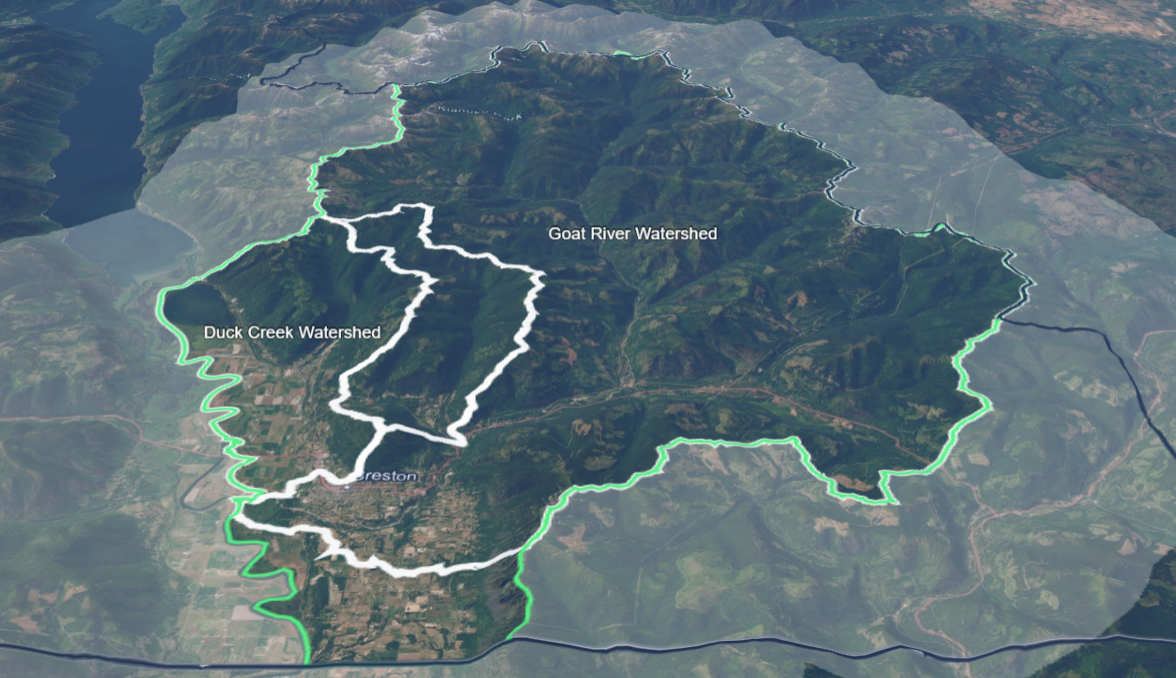
The Regional District of Central Kootenay (RDCK) in collaboration with yaqan nuʔkiy, is doing water sustainability planning to respond to growing concerns about water availability in the Goat River Watershed (includes the communities of Canyon, Erickson, Kitchener, Lister, Town of Creston, West Creston, Wynndel, and yaqan nuʔkiy). This effort aims to protect the health and resilience of the local watersheds that support communities, ecosystems, and economies.
This page will keep you informed about the project’s progress and provide opportunities to participate through surveys, conversations, and events. Your input will help shape a locally grounded approach to watershed sustainability that reflects the values and needs of the region.
The Engagement Approach
This work is grounded in Ktunaxa values, including ʔakxamis q̓api qapsin (all living beings), ʔukiniⱡwitiyaⱡa (many people working with one heart), and ʔit̓qawxawiȼikimik (everyone holds this belief together). It reflects a shared commitment to respectful relationships, deep listening, and collaborative solutions that consider both Indigenous and local knowledge systems.
We’re inviting the public, interest groups, and local leaders to take part in a series of conversations, campaigns, and storytelling activities. Engagement will unfold over four phases:

Phase 3: Farm and Food Producers Engagement
Lunch & Learn: Agriculture and Water Discussion
The RDCK and Kootenay and Boundary Farm Advisors (KBFA) are hosting a lunch and discussion focused on water challenges and opportunities for agriculture in the Creston Valley.
Producers are invited to share their experiences and concerns as the region faces diminishing water supplies, dry wells, crop impacts from heat and flooding, and shifting pest pressures. This session is part of the Water Sustainability Planning process for the Goat River Watershed, and your insights will help shape next steps.
The event includes lunch, a short presentation on how the watershed works, a moderated panel featuring local experts, and an open floor to hear directly from producers.
Date: Thursday, January 8, 2026
Time: 11:30 am – 3:00 pm
Location: Creston Hotel (Jimmy’s Pub)
Registration: Please register so we can plan for lunch.
All are also invited to join the RDCK at the Creston Valley Visitor Centre for the unveiling of the 3D model of the Goat River watershed. Explore the landscape in a fresh way and see place names in both Ktunaxa and English. Drop in, take a closer look, and chat with staff about the land and water that connect the community.
Date: Thursday, January 8, 2026
Time: 5:00–6:30 pm
Location: Creston Valley Visitor Centre
Refreshments provided.
Phase 2: Open Houses and Kitchen Table Conversations
Open houses were held in Canyon, Erickson, Kitchener, the Town of Creston, West Creston, and Wynndel. Each event began with a drop-in session where residents could look through displays about local water challenges, project goals, and watershed information. These materials included posters and a Water Sustainability Planning FAQ.
We gave a short presentation that summarized the project and key background information. Discussion was built into the presentation to keep the session conversational, and additional time was provided at the end for more questions and comments. Thank you to all that shared your knowledge and perspectives.
Following the open houses, we’re inviting residents to stay involved in shaping the future of water in the Goat River Watershed. There are four simple ways to get involved whether you want to share your story, spark conversations, learn more, or stay connected. In this phase, we’re highlighting Kitchen Table Conversations as a meaningful way to bring water discussions into homes and communities. See below for details.
How to Get Involved

Connectors host conversations with family, friends, or neighbours about water. These kitchen-table discussions are a chance to explore local issues, hear perspectives, and share ideas for action. Explore the Kitchen Table Discussion Guide

Storytellers share their personal connection to water, whether through memories, observations of change, or hopes for the future. Stories may appear in reports, on social media, or on the RDCK website. Reach out to Camille to set up an interview or share your story over email to cleblanc@rdck.bc.ca  Contributors share their voice through the Water Values Survey, forums, or conversations. Your input helps build understanding of water sustainability in the Goat River Watershed. You’re also encouraged to join our mailing list for updates, resources, and future opportunities.
Learners are eager to deepen their understanding of what it takes to build a sustainable water future in the Goat River Watershed. Join our mailing list!
Phase 1: Water Values Survey
We begin by opening a space for reflection and dialogue. The Water Values survey invites you to share how you feel about the state of water and your personal observations. The goal is to listen and learn from a wide range of experiences and voices.
Background
All beings in the region are increasingly affected by the impacts and pressures on water systems. In recent years, the area has experienced diminishing water supplies, dry wells, crop losses from heat, flooding, and shifting pest patterns due to milder winters.
In May 2024, yaqan nuʔkiy and the RDCK sent a letter to the Ministry of Water, Land and Resource Stewardship (WLRS) requesting support for this work and expressing interest in creating a Water Sustainability Plan. WLRS responded with support, recognizing the need for a new, collaborative approach to watershed stewardship in the valley.
Who's Listening
-
Phone (236) 532-2016 Email PMarshallSmith@rdck.bc.ca -
Phone 250-352-1543 Email cleblanc@rdck.bc.ca
3D Map
Explore the Goat River Watershed 3D Map! Click on the image below.